
IC Bus - A History of Innovation
For over 90 years, IC Bus has been moving students safely to and from school. What started as a small operation in Arkansas has become one of the most recognized names in school transportation—a brand known for building buses that last, equipped with advanced safety features, and designed to make the driver’s job easier.
The Many Stops Along the Way
International Harvester (the predecessor to today’s company) started building commercial and school buses in 1915. IC Bus, known then as Ward Body Works, was founded in 1933 in Conway, Arkansas. The company—and later AmTran—earned a reputation for building tough, reliable school buses with safety baked in.
In 1991, Navistar International bought into the company, and by 1995 owned it completely. A few years later, they opened an assembly plant in Tulsa, Oklahoma. The facility started production in 2001 with a simple approach: build everything in one place, get it right, and keep everyone safe. More than 250,000 buses have come out of that plant since then.
In 2023, IC Bus rolled out the Next Generation CE Series—a significant redesign that brought real upgrades in safety, comfort, and tech.
Safety First. Last. And Always.
Safety has always mattered at IC Bus, but it's gotten smarter over time. When electronics became standard in vehicles, IC Bus added Electronic Stability Control to help drivers stay in control when roads get slick or turns come up fast. It was an early move toward active safety that cut down on rollovers and loss-of-control crashes.
Next came systems that watch the road ahead. Collision avoidance technology marked a significant step forward in school bus safety, helping drivers recognize and respond to potential hazards. Today’s systems use a combination of cameras, radar, and intelligent braking technologies to enhance driver awareness and support safer operation.
Visibility around the loading zone was also addressed. IC Bus redesigned the hood on newer buses to give drivers another 11 inches of forward view, making it easier to see kids in front of the bus and cutting down on blind spots.
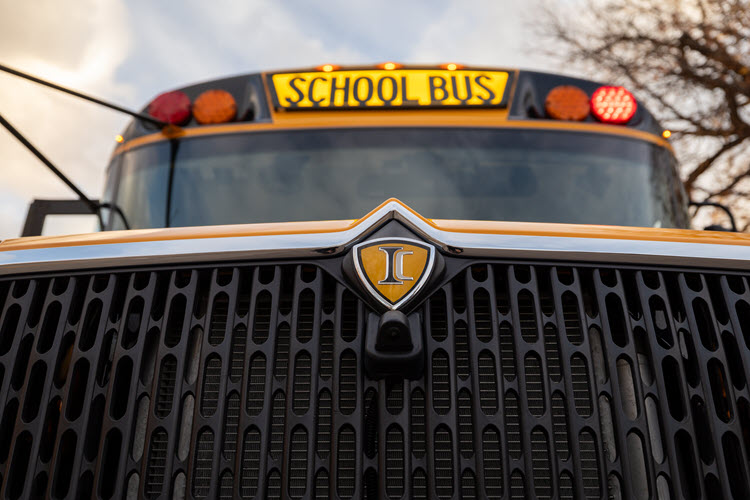
Visibility is a critical part of school bus safety. To help increase visibility in low-light and challenging weather conditions, all new IC Bus™ CE Series school buses come standard with First Light Illuminated School Bus Signs (ISBS) and Fully Illuminated Stop Arms (FISA). These highly visible safety features help alert surrounding motorists when students are boarding or exiting the bus.
A Pleasant Ride to School
IC Bus pays attention to the driver's workspace because small things add up. As part of our DriverFirst philosophy, we want to ensure the driver is comfortable and has all the tools they need to safely transport children to and from school. For example, the instrument panel is angled toward the driver for easy reach. Digital displays keep information clear. Better HVAC keeps the cab comfortable year-round. Storage compartments and cup holders are large and easily accessible, and several driver’s seats are available, including air-ride suspension seating. All driver’s seats are adjustable for height, tilt and fore/aft.

Top of the Class Connectivity
My International™ helps school transportation departments proactively manage their fleets with Advanced Remote Diagnostics, vehicle health alerts, service resources, and maintenance insights—all in one place. The platform simplifies mixed-fleet management by bringing key vehicle information together through a single connected experience, helping fleets reduce downtime, improve operational efficiency, and keep buses on the road.
My International also provides operational visibility through telematics and route activity reporting, helping transportation departments monitor fleet activity and make informed maintenance decisions. For electric buses, the platform offers charging status, state of charge, estimated range, and charging performance data to help maximize uptime and keep vehicles ready for the next route.
Supporting the Shift to Electric
Electric school buses offer districts a practical path toward sustainability while delivering the reliability and performance students depend on every day. With smooth acceleration, quiet operation, and fewer moving parts than traditional vehicles, electric buses can help reduce maintenance requirements and support lower operating costs over time.
To help simplify the transition, IC Bus provides guidance throughout the electrification journey. Customers have access to support for vehicle specification, route analysis, driver and technician training, and identifying potential funding opportunities. Working closely with dealers and industry partners, IC Bus helps districts make informed decisions and develop a plan that fits their transportation needs.
Making the Honor Roll
More than 1,600 dedicated team members build approximately 11,000 new buses annually at "The Tulsa Mile," where the chassis, engine, body, and options are all assembled inside the emerald-hued, mile-long assembly floor. With an average tenure of 6.5 years, these skilled workers provide more than $60 million in direct income to the Tulsa community each year, making IC Bus not just a manufacturer but a vital economic anchor for the region.
IC Bus mixes decades of experience with practical innovation. Smarter safety systems, better visibility, tougher construction, improved comfort, and fleet management tools all serve one goal: protect students, support drivers, and help schools do their jobs better. It's a brand built on history but focused on what's next—safer, smarter, more reliable transportation for the road ahead.
Other articles you might like
-

September 18, 2026
Why Total Cost of Ownership Matters More Than Purchase Price
When evaluating a new school bus, it's easy to focus on the purchase price. After all, vehicle acquisition is one of the largest investments a transportation department will make. But the true cost of a bus extends far beyond the initial transaction.
-
April 20, 2026
Setting Drivers Up For Success
Behind every IC Bus CE Series is a group of people who take their responsibility personally. The engineers, welders, technicians, and inspectors who build each bus all play a role in creating a vehicle designed to safely serve students and their communities.
-

February 24, 2026
What School Bus Drivers Need to Know: Driver Training Fundamentals
Although sometimes overlooked, school bus drivers play one of the most critical roles in any school district. Managing the safe transport of students requires a unique set of skills that include technical ability, emotional intelligence, situational awareness and more.
-
October 21, 2025
250,000 Units Mark Moment in Deep IC Bus History
After 25 years in operation and 250,000 units (and counting) coming from the IC Bus, LLC (IC Bus) Tulsa Bus Plant, the people at IC Bus have a lot to celebrate.
-
January 22, 2025
Electric Bus Myths and Facts
Electrified transportation represents an important sustainable option and there is no shortage of opinions, predictions and misunderstandings. The fact is, it’s happening and it’s happening now – especially in the school bus world. That’s why it’s important to consider all the facts when planning your EV fleet strategy.
-
December 16, 2024
Everything You Need to Know about Adding an EV Bus to Your Fleet
Want to add electric vehicle (EV) buses to your school fleet but aren’t sure where to start? Watch these six short videos from IC Bus® to get insights and tips from experts on what you need to consider and how to get help along the way.